
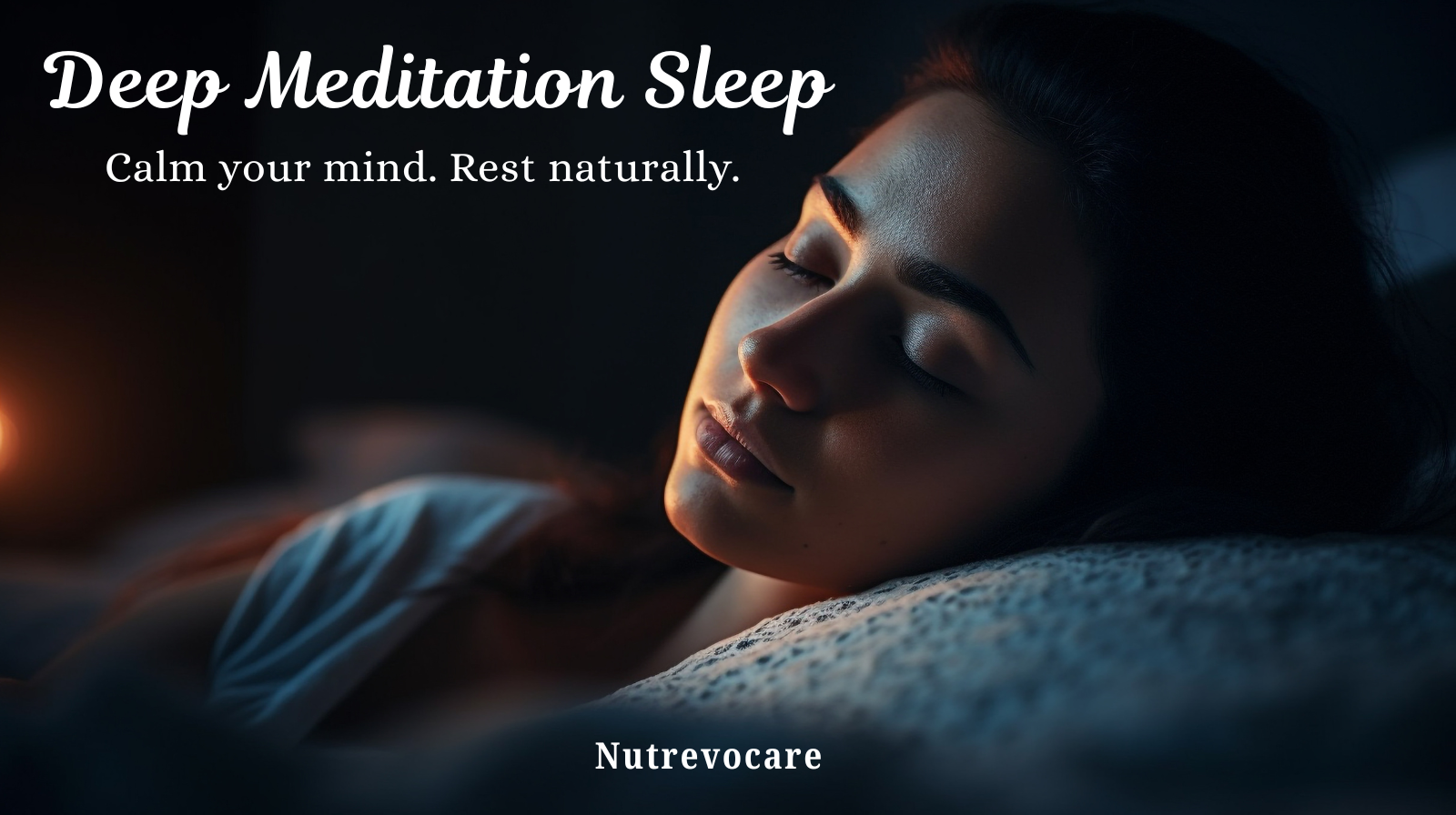
Deep meditation sleep is not about forcing yourself to sleep faster. It is about slowing your mind enough so that sleep can arrive naturally. In a world full of noise, screens, and constant thinking, deep meditation sleep feels like a soft pause at the end of the day.
I discovered deep meditation sleep during a phase when my body was tired, but my mind refused to rest. I would lie in bed replaying the day, planning tomorrow, and worrying for no clear reason. Some nights, I felt exhausted yet fully awake, staring at the ceiling in silence. That is when I realized something important. Sleep is not only physical. It is emotional and mental too. Before my body could rest, my mind needed care and calm.
What Is Deep Meditation Sleep? :

Deep meditation sleep is a simple practice where gentle meditation techniques help your body enter a relaxed state before sleeping. You are not trying to “control” your thoughts. You are learning to observe them without getting pulled in.
This relaxed awareness signals your nervous system that it is safe to rest. Slowly, breathing deepens, muscles loosen, and the mind becomes quiet. Sleep follows naturally, without struggle.
Unlike quick fixes or sleep pills, deep meditation sleep works with your body, not against it.
Why Sleep Feels Hard for So Many People Today

Many people in the US struggle with sleep because modern life keeps the nervous system alert all the time.
Common reasons include:
Late-night screen use
Stress from work and family
Irregular sleep schedules
Caffeine too late in the day
Mental overload and constant thinking
When the body stays in alert mode, sleep often becomes light or broken. Deep meditation sleep helps the nervous system slow down and gently move from alertness into real rest.
How Deep Meditation Sleep Supports Real Rest
The beauty of deep meditation sleep is its simplicity. You do not need experience, special tools, or long sessions. It works by gently supporting your body instead of forcing change.
Here is how it helps:
Slows racing thoughts
Relaxes tense muscles
Regulates breathing naturally
Calms the nervous system
Improves sleep depth over time
With regular practice, many people notice they fall asleep with less effort and wake up feeling more refreshed and clear-headed.
My Personal Experience With Deep Meditation Sleep
At first, I was not sure about it. Sitting quietly felt uncomfortable, and my thoughts felt louder than ever. Still, I did not push myself. I stayed patient and gentle.
I began with just five minutes before bed, nothing more. I focused on my breathing. When my mind wandered, I calmly brought it back. Some nights I fell asleep quickly. Other nights I did not. But something important shifted.
My body stopped resisting sleep. Even on nights when sleep was light, I felt calmer and more at ease. Over time, deep meditation sleep became a normal part of my routine, just like brushing my teeth. That sense of calm did not stop at night. It followed me into my days too.
A Simple Deep Meditation Sleep Routine You Can Try Tonight
You do not need perfection. You only need consistency.
A simple step-by-step routine:
Dim the lights about 30 minutes before bed
Put your phone away or switch it to night mode
Sit or lie down in a comfortable position
Close your eyes
Take slow, deep breaths
Notice your body slowly relaxing from head to toe
When thoughts arise, gently bring your focus back to breathing
This small practice helps your body unwind and prepares you for deep meditation sleep without pressure or effort.
How Nutrition and Daily Habits Support Deep Meditation Sleep

Sleep does not begin at bedtime. It starts during the day.
Small habits that support deep meditation sleep include:
Eating regular meals
Avoiding heavy dinners late at night
Staying hydrated throughout the day
Adding gentle movement to your routine
Reducing caffeine after the afternoon
At Nutrevocare, we focus on how small daily choices shape long-term health. Sleep, nutrition, and calm are closely connected. When your body is nourished and cared for, your mind finds it easier to rest.
Deep Meditation Sleep and Long-Term Well-Being
Over time, deep meditation sleep begins to affect more than just your nights. The changes are quiet, but you start noticing them.
You may experience:
Feeling more steady and less emotionally reactive
Stress not hitting as hard as it used to
Thoughts feeling less crowded
Focus coming a little easier
Rest feeling safer and more natural
Sleep slowly becomes something you trust again, not something you chase or worry about. You stop watching the clock. You stop forcing your body to relax.
You do not need to change everything to feel this shift. Start small:
One quiet moment before bed
One slow, deep breath
One pause at the end of the day
Deep meditation sleep is not a trend or a quick fix. It is simply learning to listen to your body again.
If you are building a healthier lifestyle through simple, supportive habits, deep meditation sleep fits naturally alongside mindful eating, balanced nutrition, and gentle daily routines. This calm, steady approach is the same philosophy we share at Nutrevocare.
Final Thoughts
Deep meditation sleep teaches us something important. Rest cannot be forced. It has to be invited. When we stop trying to control sleep and instead focus on calming the body, rest begins to feel safer and more natural.
If you struggle with sleep, it does not mean something is wrong with you. Your body is simply asking for calm. Learning how to manage stress in everyday life can make a real difference, because stress often builds quietly during the day and shows up at night when everything becomes still.
With patience and kindness, deep meditation sleep can help you rebuild trust with rest, one peaceful night at a time.